Originally published on dryounghanseo.com on October 27, 2026, while Dr. Younghan Seo practised at 4ever the Cheongdam. Clinic names and details in the text reflect that time. Dr. Seo now sees patients at L&L Clinic, Cheongdam.
Teoxane is the company, and Teosyal is the name of its filler line in many countries, so the two names point to the same Swiss maker. In Korea you may see both: Teoxane as the company name and Teosyal as the name of the filler line, online and on packaging. This article explains what each name means, which one you will meet in Korea, and how to check which product is used for you.
What is Teoxane, and what is Teosyal?
Teoxane is a filler maker, and Teosyal is one of its product lines. According to the company’s own site, Teoxane Laboratories was created in Geneva in 2003, and the company uses “TEOXANE” as its company name. The same site lists Teosyal as a product line name, including the Teosyal RHA range and the Teosyal PureSense products (Teoxane).
- Teoxane: the company, based in Switzerland
- Teosyal: a filler product line from that company, used in many markets
- RHA: a technology name, short for Resilient Hyaluronic Acid
- Redensity and PureSense: other names that appear in the Teosyal line
Why do people in Korea hear two names?
Both names are in use because they name different things. Teoxane is the company, and Teosyal is one of the filler lines that the company makes. A product can therefore be described by the company name, by the line name, or by both, depending on where you read about it.
- Company name: Teoxane, the same on the manufacturer’s site in every market
- Line name: Teosyal, which includes the Teosyal RHA range and the Teosyal PureSense products
- In listings: a product page may give the line name, the company name, or both
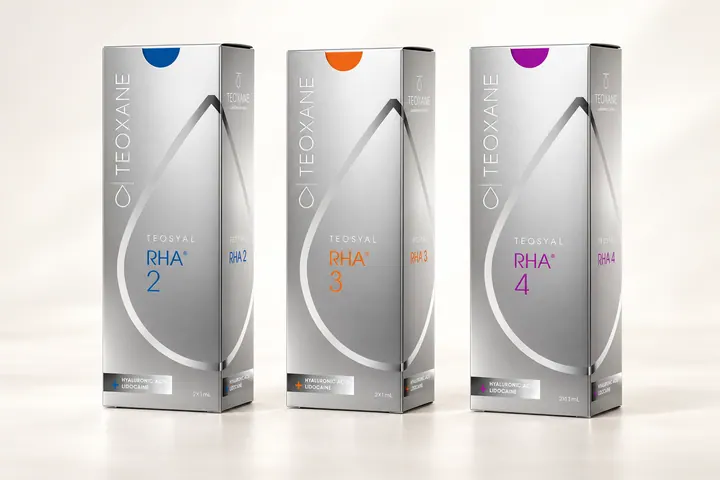
- On the box: the product name, which may say Teoxane, Teosyal, or both
What name will you see on the box and in the Korean register?
The box and the register can use different names, so check both. The Korean register of medical devices lists these products by model code rather than by the name RHA or Teosyal, and it names Teoxane S.A. as the manufacturer and the importer that holds the Korean approval. An earlier article on RHA fillers explains how to read those records.
- On the box: the product name, which may say Teoxane or Teosyal
- In the register: a model code, the manufacturer name and the approved purpose
- What links them: the manufacturer, the importer and the details printed on the box
- Where to look: the Korean register at emedi.mfds.go.kr, searched by approval number
Knowing both names is also useful after you go home. If you see a doctor in your own country later, the product may be listed there under the other name, so giving both names and the date of treatment makes it easier for them to understand what you had.
Is an RHA filler the same as a Teosyal RHA filler?
They are the same range of gels under different market names. RHA is the technology name, and the products are sold as the RHA Collection in the United States and often as Teosyal RHA elsewhere, as described in the earlier article. In Korea, RHA 2, RHA 3 and RHA 4 are approved for one purpose: to temporarily improve moderate to severe nasolabial folds in adults aged 22 or older.
- RHA 2 and RHA 3: named in the Korean approval for nasolabial folds
- RHA 4: named in a second Korean approval for the same purpose, at a different depth
- Other products: if a product is not on this list, ask which one it is and how it is approved in Korea
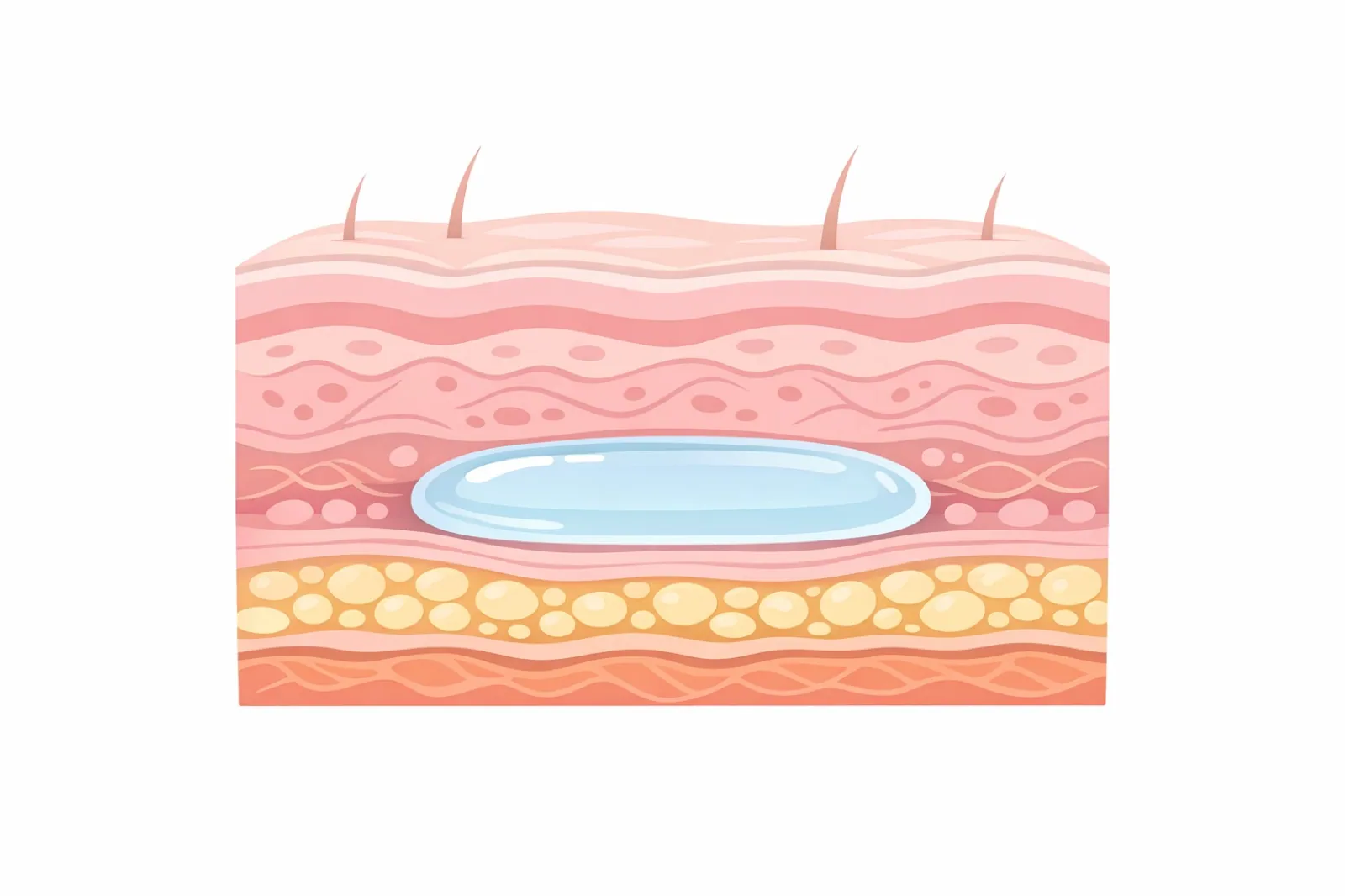
How a filler is planned for a line that moves is explained in an earlier article on nasolabial fold filler.
What should a visitor from abroad plan for?
Plan to confirm the product name before treatment, because names differ between countries.
- Ask which product: the name, such as RHA 2, RHA 3 or RHA 4, and which line it belongs to
- Check the box: you can ask to see the packaging, which shows the name and the manufacturer
- Keep a record: write down the product name and the area treated, which helps with later visits and with clinics at home
- Your earlier fillers: bring the names and dates of any filler you have had, so the doctor can plan around them
At 4ever the Cheongdam, Dr. Younghan Seo has worked with Teoxane fillers for about two years; his work with the line is also described in the clinic’s profile article.
What side effects should you know about?
Swelling, bruising, redness and tenderness at the injection points are commonly reported after filler injections. Injecting near blood vessels carries a risk of vascular complications with any filler, which is one reason the area is assessed first.
| What may happen | What to do |
|---|---|
| Swelling or bruising at injection points | Follow the aftercare instructions and tell the clinic if it worsens instead of settling |
| Tenderness or firmness in the treated area | Mention it at your follow-up so the doctor can check it |
| A lump you can feel or see | Contact the clinic and have it examined, rather than massaging it on your own |
| Severe pain, skin color change, or blanching near the site | Contact the clinic or seek medical care right away |
Tell the clinic about any medication you take, any previous treatment in the same area, and any history of reactions to injectable treatments. Whether this treatment suits you is a clinical judgment your doctor makes after examining you.
Frequently asked questions
Are Teosyal and Teoxane the same?
They come from the same Swiss maker. Teoxane is the company, and Teosyal is the name of its filler line in many countries.
Why does the box say Teosyal when the company is Teoxane?
Teoxane is the company’s name, and Teosyal is the name of one of its filler lines, so a product can carry both. Line names such as Teosyal RHA are still used on the manufacturer’s site.
Which name will I see in Korea?
You may see both. Some pages and listings use the company name, Teoxane, and others use the line name, Teosyal, so check the product name on the box and the approval number.
Is Teosyal RHA the same as Teoxane RHA?
They come from the same manufacturer, and the Korean register lists the products by model code rather than by name. If you need to know exactly what you received, check the box label and the Korean approval number.
What should I tell my doctor at home about the filler I had in Korea?
Give the product name as written on the box, the other name it may be sold under, the area treated and the date. Photos of the box and any card the clinic gives you are a useful record.
How can I check which product was used on me?
Ask the clinic for the product name and to see the box, write down the name and the area treated, and look up the approval number at emedi.mfds.go.kr.
This article is general information about a treatment offered at 4ever the Cheongdam. It is not medical advice and does not replace consultation with a doctor who has examined you. Product approvals, regulations, and clinic practices change; please confirm anything that affects a decision with the clinic directly.
Sources: Teoxane, dermal filler solutions (manufacturer’s description). Korean Ministry of Food and Drug Safety, medical device register, emedi.mfds.go.kr (records 수허 19-48 and 수허 19-49; retrieved 3 November 2026).