Originally published on dryounghanseo.com on November 16, 2026, while Dr. Younghan Seo practised at 4ever the Cheongdam. Clinic names and details in the text reflect that time. Dr. Seo now sees patients at L&L Clinic, Cheongdam.
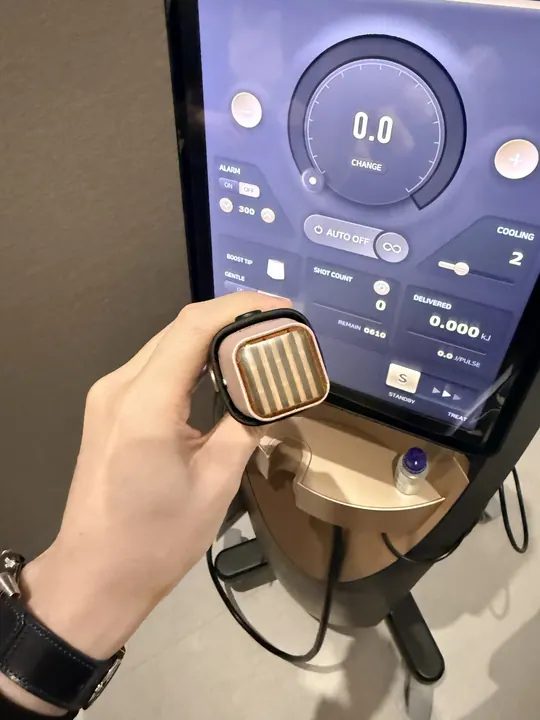
Yes, acne and rosacea are both named in Potenza’s Korean approval. In Korea, the Potenza device (제허 19-126) is approved to improve wrinkles, melasma, senile lentigines, telangiectasia, rosacea, acne, hyperhidrosis and osmidrosis by coagulating tissue with radiofrequency (RF) current, and to remove syringoma by incising tissue. Two more approvals sit beside it: one for the RF unit (제허 19-78) and one for the pumping tip (제인 19-4411). This article explains what each approval covers, what the listed conditions mean, and how treatment is planned.
What do Potenza’s three Korean approvals cover?
Each approval names a different product and a different purpose. All three are held by Jeisys Medical and are listed in the Ministry of Food and Drug Safety (MFDS) medical device register (emedi.mfds.go.kr).
| Approval | Product name in the register | Approved purpose |
|---|---|---|
| 제허 19-126 | POTENZA™ | Improves wrinkles, melasma, senile lentigines, telangiectasia, rosacea, acne, hyperhidrosis and osmidrosis by coagulating tissue with RF current; removes syringoma by incising tissue |
| 제허 19-78 | POTENZA RF | An electrosurgical unit used to coagulate tissue with RF current |
| 제인 19-4411 | POTENZA Pumping Tip | A single-use tool that touches the medicine directly and is used to deliver medicine into the skin |
“Jeheo” (제허) means a manufacturing approval, and “Jein” (제인) means a manufacturing certification for a lower device class. POTENZA™ and POTENZA RF are class 3 general-purpose electrosurgical units, and the pumping tip is a class 2 device.
The list of conditions belongs to 제허 19-126. The other two records describe what the equipment does, coagulating tissue or delivering medicine, without naming conditions.
What do the conditions in the approval mean?
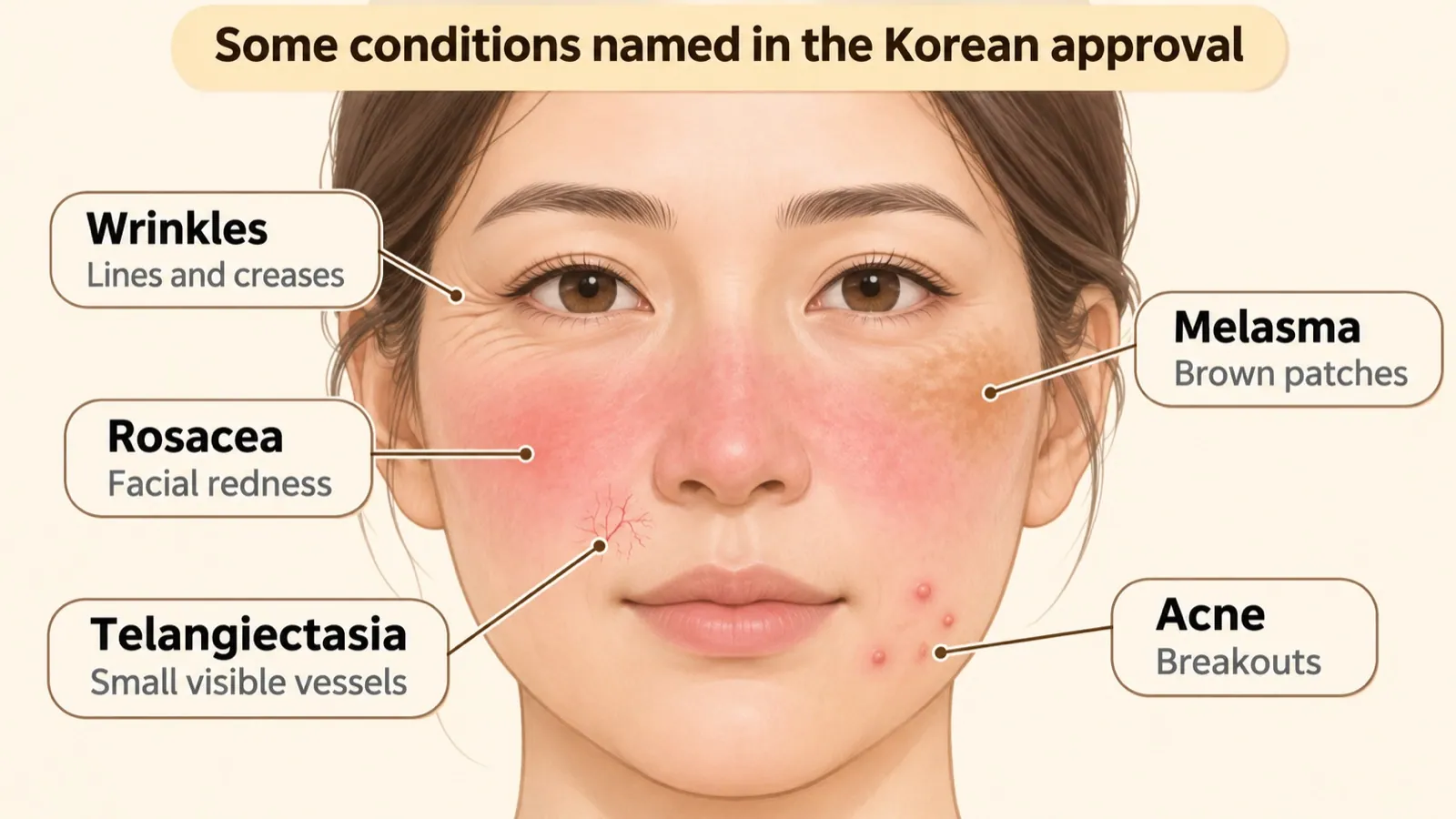
Most of the terms in the approval are medical names for common skin concerns. In plain words:
- Wrinkles: lines and creases in the skin
- Melasma: patches of brown pigmentation, often on the cheeks and forehead
- Senile lentigines: flat brown spots that come with age and sun exposure, often called age spots
- Telangiectasia: small, visible blood vessels on the skin surface
- Rosacea: a long-term skin condition with facial redness, often on the cheeks and nose
- Acne: breakouts of blocked and inflamed pores
- Hyperhidrosis: sweating more than the body needs
- Osmidrosis: strong body odor from sweat glands, usually in the underarms
- Syringoma: small, harmless bumps formed by sweat ducts, often around the eyes
The approval wording is the same for every patient. Which of these concerns is treated for you, in which area and with which tip, is decided at an examination.
Does the approval include acne and facial redness?
Yes. Acne is named in the approval, and so are two causes of facial redness: rosacea and telangiectasia.
- Acne: named directly in 제허 19-126
- Rosacea: named directly; redness on the cheeks and nose is one of its signs
- Telangiectasia: named directly; these small vessels can make the skin look red
- Melasma and age spots: named directly, as pigmentation concerns
Redness after a Potenza session is something different. It is a temporary reaction to the treatment itself, and it usually settles within hours to a few days. What to expect in the first days is explained in an earlier article on redness and breakouts after Potenza.
If you are asking about redness, it helps to say which kind you mean: redness that is there every day, or redness that started after a treatment.
What does “coagulating tissue with RF current” mean?
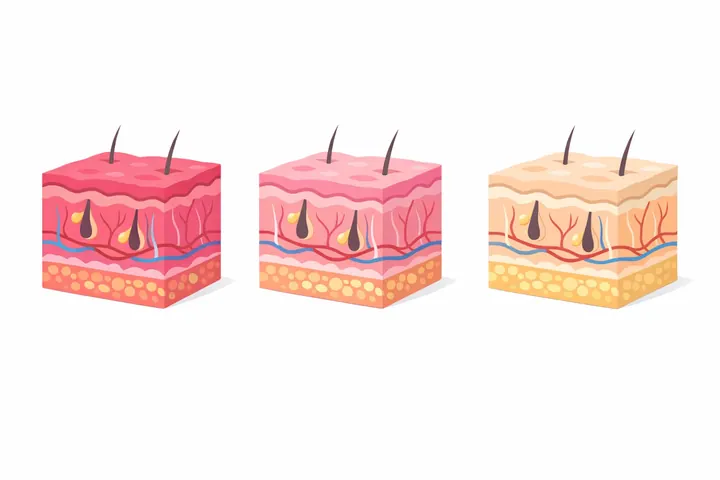
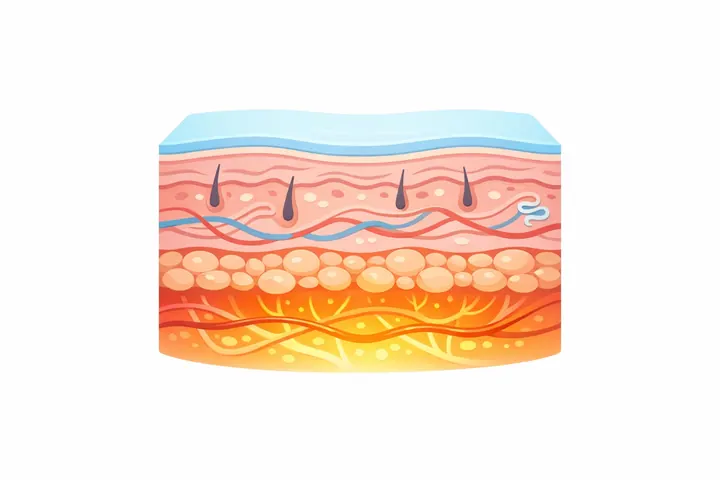
It describes how the device acts on the skin. With its needle tips, Potenza carries RF energy through very fine needles past the outer layer of the skin and releases it at a set depth in the layer below, the dermis. The heat that builds there coagulates a small amount of tissue, and the skin’s own response develops gradually over several weeks.
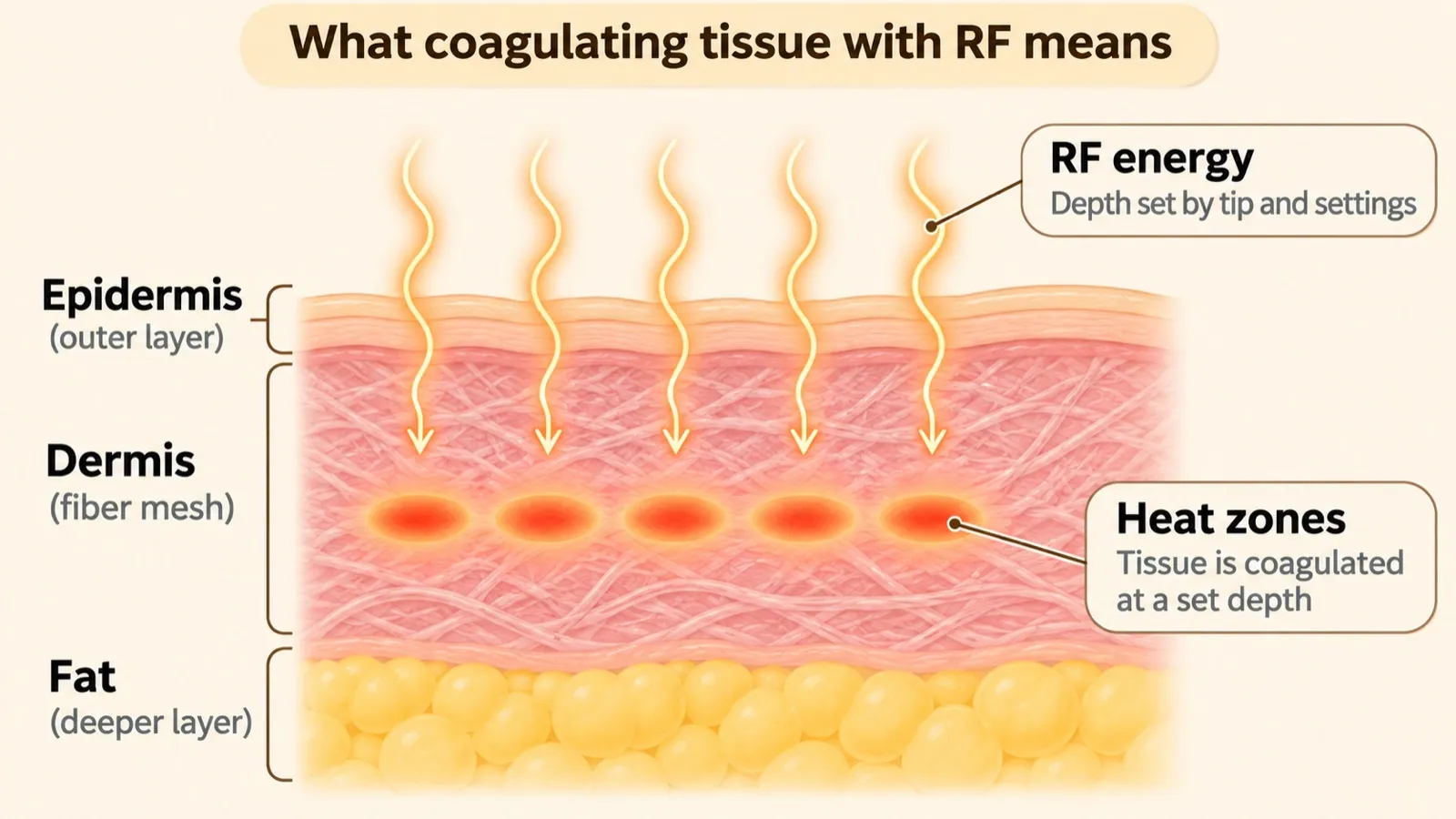
- The depth: set by the tip and the needle depth chosen for each area
- The energy: set in the device’s settings, area by area
- The response: the change comes from the skin over the following weeks, not on the day of treatment
The tips differ in where they release the energy. A tip with uninsulated needles releases it along the whole needle, close to the surface, while an insulated tip releases it at the needle tip, deeper. How each tip works is explained in an earlier article on Potenza tips.
What is the pumping tip approved for?
The pumping tip has its own approval, 제인 19-4411, as a single-use tool for delivering medicine into the skin. Its needles are thicker than those of the other needle tips, so it can carry an ingredient into the skin in the same pass as the RF energy.
- Its own record: the pumping tip is listed separately from the device
- Single use: the approval describes it as a disposable tool that touches the medicine directly
- The ingredient: which one is used is decided as part of the treatment plan, after the skin is examined
How does 4ever the Cheongdam plan Potenza treatment?
At 4ever the Cheongdam in Seoul, a Potenza session starts with an examination of the skin, and the tip and settings are decided from what that examination shows. The doctor looks at the concern, how deep it sits in the skin and the area to be treated.
- Tip: chosen for where the concern sits, near the surface or deeper
- Settings: set in manual mode and adjusted for each area of the face, since the forehead, cheeks and jaw differ in skin thickness and oil
- A new tip each time: each tip is genuine and used for one session, and its package is opened in front of you
- After treatment: the clinic explains aftercare and follows up by message during recovery
- Language: consultations are available in English, Korean and Chinese
Dr. Younghan Seo holds a Key Doctor role with Jeisys for Density and Potenza. Key Doctor is a title the manufacturer uses for physicians who teach and present on its products, not a government qualification. His background is described in the clinic’s profile article.
What side effects should you know about?
Potenza can cause side effects, as other RF microneedling treatments can. A 2025 systematic review of fractional RF microneedling called redness the most frequently reported side effect, typically resolving within hours to a few days, with pain scores in the mild to moderate range (Niaz et al., 2025). The same review reported worsening of acne in individual patients and temporary darkening of the skin after inflammation.
- Common: redness, warmth, mild swelling and tenderness in the first days
- Less common: small breakouts, and darkening of the skin after inflammation
- Higher risk: a systematic review of microneedling named active skin infection, darker skin types and metal allergies as factors that raise the risk of side effects (Gowda et al., 2021)
Tell the clinic about any medication you take, any metal allergy and any recent treatment in the same area. Whether this treatment suits you is a clinical judgment your doctor makes after examining you.
Frequently asked questions
Can Potenza be used for acne?
Acne is one of the conditions named in Potenza’s Korean approval. Whether it suits your skin, and which tip and settings are used, is decided after your skin is examined.
Can Potenza help rosacea or visible blood vessels on the face?
Rosacea and telangiectasia, the small visible vessels that can make skin look red, are both named in the approval. Tell the doctor how long the redness has been there and what makes it worse.
Is Potenza used for melasma or age spots?
Melasma and senile lentigines, often called age spots, are both named in the approval. Pigmentation has several causes, so the doctor will look at your skin before planning anything.
Will my skin be red after Potenza?
Usually, for a short time. Reviews describe redness as the most common reaction, typically fading within hours to a few days, so leave a few days before an important event.
Which tip will be used for my skin?
It depends on how deep the concern sits and on the area. You can ask which tip is planned for each area and what it is meant to do.
I am visiting Seoul for a short trip. What should I plan for?
Leave a few days between the session and any photos, events or long flights, and bring a list of your medicines and recent treatments. Ask the clinic about the aftercare for the tip used for you.
This article is general information about a treatment offered at 4ever the Cheongdam. It is not medical advice and does not replace consultation with a doctor who has examined you. Product approvals, regulations, and clinic practices change; please confirm anything that affects a decision with the clinic directly.
Sources: Korean Ministry of Food and Drug Safety, medical device register, emedi.mfds.go.kr (records 제허 19-126, 제허 19-78 and 제인 19-4411; retrieved 16 November 2026). Niaz G, et al. Fractional radiofrequency microneedling as a monotherapy in acne scar management: a systematic review of current evidence. Clin Cosmet Investig Dermatol. 2025;18:19-29, PubMed. Gowda A, et al. A systematic review examining the potential adverse effects of microneedling. J Clin Aesthet Dermatol. 2021;14(1):45-54, PubMed.